The Awkward Pair: Turning Chimney-Breast Alcoves into Useful, Calm Storage
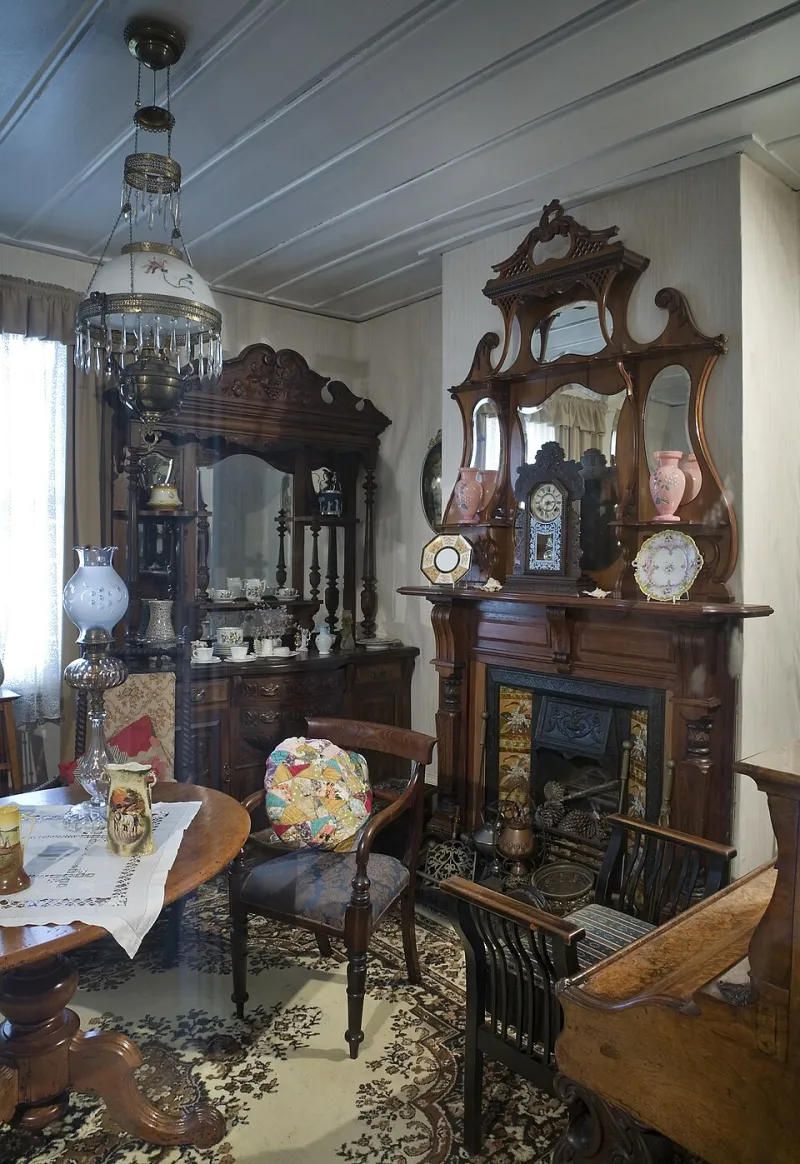
Photo: Jorge Royan, CC BY-SA 3.0, via Wikimedia Commons
Alcoves are one of those period-home features that look charming in an estate agent’s photo and slightly baffling in real life. The recesses either side of a chimney breast promise storage, display and somewhere to put the lamp, but they are rarely square, seldom identical and often just deep enough to swallow a pile of paperbacks and a tangle of cables. In a Victorian or Edwardian terrace — or any older British home with a chimney breast — the trick is to treat each alcove as a small piece of fitted furniture, not a spare shelf. Decide what job it should do, measure the awkward bits properly and choose a depth that leaves the room feeling generous rather than squeezed.
Give each alcove one job
Before you buy a single shelf, ask what the alcove is for. One side might be media storage: router, console, records, a few books. The other might be the calm side: lamp, framed photos, a basket for letters. Writing it down sounds fussy, but it stops the alcove becoming a general-purpose dumping ground. If the answer is ‘everything’, it will become the clutter trap you were trying to avoid.
It also helps to think about what should stay visible. Open shelves are brilliant for books and objects you actually like, but they are terrible at hiding the messy reality of daily life. Closed cupboards below eye level, with one or two open shelves above, usually strike the best balance in a living room. You get the display without staring at every cable and birthday card.
Measure the awkward bits, not just the width
A single width measurement is not enough. Measure the alcove at the top, middle and bottom, because old plaster and skirting boards are rarely straight. Check the depth from the back wall to the deepest part of the chimney breast, then check it again at floor level and at shelf height. Look at the skirting height, the cornice above and any picture rail. A unit that fits the middle of the alcove but clashes with the skirting will be a headache.
Use a spirit level to see how far the walls lean, and check whether the back wall is plaster or brick. If you are drilling into old plaster, use the right fixings and avoid chasing cables unless you know what you are doing. Also note the sockets, radiator valves and any television aerial points. Moving a socket is not a weekend job, so it is better to design around what is already there.
Choose a depth that suits the room
Depth is where alcove storage often goes wrong. For ordinary books, around 300mm is usually enough. For baskets, board games and larger books, 350mm gives more breathing room. Media units often need 400–450mm to house a console and leave space for ventilation. Anything much deeper than 500mm starts to feel like a cupboard and can make a narrow living room feel tighter.
Remember that a radiator needs air around it. If there is a radiator in the alcove, do not box it in tight and pile shelves above it. A slim radiator cover with a grille can look neat, but check it does not block heat or make the room harder to warm. If the alcove is the only sensible place for a radiator, keep the shelving shallow and leave a clear gap above the top.
Off-the-shelf or built-in?
Ready-made alcove units have improved a lot, and they are the sensible choice if the walls are reasonably straight and the budget is modest. Look for adjustable shelves, a plinth that can be scribed to the floor and filler panels that can be cut to fit uneven gaps. A joiner can add a simple frame and matching paint to make an off-the-shelf unit look far more built-in than it is.
Bespoke joinery costs more, but it earns its keep in awkward spaces. Sloped ceilings, wonky chimney breasts and shallow recesses are exactly where made-to-measure shelving makes sense. Ask for adjustable shelves rather than fixed ones, and specify a finish that can be touched up. If you are painting the unit the same colour as the walls, the alcove will recede; if you go for a contrast colour, it becomes a feature. Neither is wrong, but decide before the joiner starts.
Radiators, cables and lighting
Lighting is the difference between storage and a black hole. A small wall light on the chimney breast, or a slim picture light above a shelf, can make the alcove useful in the evening without adding a floor lamp. Battery-powered options exist, but if you are having work done, ask an electrician about a switched spur or a socket inside the unit. It is much easier before the shelves go in.
Cable management is worth planning too. Leave a gap behind the unit for leads, or drill a discreet hole in a shelf rather than letting cables loop across the front. A simple basket or lidded box can hide the router and the extension lead, but make sure the router still gets ventilation.
Stop the clutter trap
Alcoves attract clutter because they are visible and easy to fill. The fix is a simple rule: closed storage below, curated display above. Use baskets, lidded boxes and cupboards for the things you need but do not want to look at. Keep the top shelf for the objects you genuinely enjoy. Every few months, take everything out, dust the shelves and put back only what earns its place.
It also helps to leave some empty space. A shelf that is 80% full looks intentional; one that is 100% full looks like a storage crisis. If you have two alcoves, resist the urge to fill both in exactly the same way. A little asymmetry — a lamp on one side, a plant on the other — makes the room feel collected rather than catalogued.
Finishing touches that make the room work
Paint the inside of the alcove in the same colour as the surrounding wall if you want it to disappear, or use a deeper tone to give the shelves depth. Add a small mirror or a favourite print at eye level, but do not cover every surface. The chimney breast itself should still feel like the focal point, not the storage units either side.
Above all, treat the alcoves as part of the room rather than a separate problem. They should hold the things that make daily life easier — the books, the lamp, the records, the basket for odds and ends — without shouting about it. Done well, they stop being awkward gaps and start being the most quietly useful corner of the living room.