Good Bones, Fair Prices: Buying Pre-Owned Furniture in the UK Without the Regret
Photo: John Parkin, CC BY-SA 2.0, via Wikimedia Commons
Buying pre-loved furniture in the UK has shed its slightly apologetic image. Between charity shops, Facebook Marketplace, local auctions and house clearances, there is a huge amount of good furniture looking for a second home. The catch is that the difference between a brilliant buy and a false economy is often hidden underneath the cushions. A little preparation turns second-hand shopping from a gamble into a sensible way to furnish a real British home — especially when you want character without paying new-showroom prices.
Where to look, and what each place is good for
Charity furniture shops are the low-risk option. British Heart Foundation furniture shops, Sue Ryder, Emmaus and local hospice shops often deliver, check electricals and price fairly. You will not find a rare designer piece every week, but you will find solid dining tables, bookcases and the occasional very good armchair. Ask whether they deliver, how much it costs and whether they will hold an item while you arrange transport.
Online marketplaces are where the bargains and the time-wasters live. Facebook Marketplace and Gumtree are good for local collection, but check the seller’s profile, read the description carefully and ask for extra photos of joints, labels and the underside. eBay is better for auctions and buyer protection, though furniture is often collection-only. If an item is listed as ‘collection only’ in a town forty miles away, factor in the van hire before you get excited.
Auctions and house clearances can be excellent for wooden furniture, mirrors and odd chairs. Read the terms: some auctions charge buyer’s premiums, VAT and storage fees, and many are sold as seen. House clearances are often advertised locally or through clearance companies. Take a torch, a tape measure and a friend who will tell you when a bargain is actually a project.
The five-minute check before you commit
Start with the frame. Sit on the chair, lean on the table and give the piece a gentle shake. Wobbling legs, creaking joints and loose dowels are fixable, but they are leverage for negotiation. Look underneath: dust, woodworm holes, water stains and repairs tell you more than the top surface ever will.
For wooden pieces, check for woodworm. Tiny flight holes are common in older furniture, but fresh dust beneath them is the warning sign. If you see fine sawdust, the infestation may be active. Tap the wood gently; a dull, papery sound can mean trouble. Small holes in a dry, well-finished piece are not automatically a deal-breaker, but active woodworm needs treatment, and that changes the maths.
For upholstery, check the frame by pressing down on the arms and back. Listen for creaks. Look at the webbing underneath if you can. Ask about smoke, pets and stains, then trust your nose when you get there. A washable loose cover is forgiving; a fixed velvet sofa with a pet smell is not. Check zips, cushion inners and whether the cushions have gone flat. Replacing foam is easy enough; rebuilding a broken frame is not.
Fire-safety labels are not optional
In the UK, upholstered furniture sold must meet the Furniture and Furnishings (Fire) (Safety) Regulations 1988. Look for a fire-safety label on the underside of the seat or the back of the sofa. If it is missing, ask why. A missing label on an older piece is a risk, not a quirky detail. This is especially important if you are buying for a rental, a child’s room or a home you share with other people. A bargain sofa is not a bargain if you cannot verify what you are bringing into the house.
Measure the route before you measure the room
That beautiful wardrobe may fit the bedroom wall but not the turn on the stairs. Measure the doorway, the hallway, the stair width, the landing and any tight corners. Check ceiling height if the piece is tall. If it needs dismantling, ask whether the seller has the fixings and whether you are happy to reassemble it. For sofas, check whether the legs unscrew and whether the back can be removed.
Transport is where cheap furniture becomes expensive. A man with a van is often the simplest answer, but get a quote before you buy. Blankets, straps and a friend make the job safer. Remember that a £40 armchair can become a £120 armchair once you have paid for van hire and a takeaway for the friend who helped you carry it.
Negotiating without being a nuisance
Be polite and direct. Ask whether the price is fixed, especially if the listing has been up for a while. If you are buying several items from the same seller, ask for a bundle price. If you can collect quickly, say so — that is often worth more than a hard haggle. Do not agree a price and then ask for a discount when you arrive. It wastes everyone’s time and makes sellers less likely to hold the item.
When a bargain is false economy
Reupholstery is rarely cheap. A full professional job on an armchair can easily run into hundreds of pounds, so a £30 chair with ruined upholstery may not be the steal it looks like. Woodworm treatment, missing table leaves, broken hinges and replacement cushions all add up. If the frame is sound and the upholstery is tired, you have options. If the frame is wobbling and the joints are cracked, walk away unless you genuinely want a project.
Also be honest about your time. A free sofa that needs a deep clean, new foam and a van is not free. A cheap dining table that needs stripping and refinishing might be worth it if you enjoy that sort of thing, but not if it will sit in the garage until 2027.
Mixing pre-loved pieces into a polished home
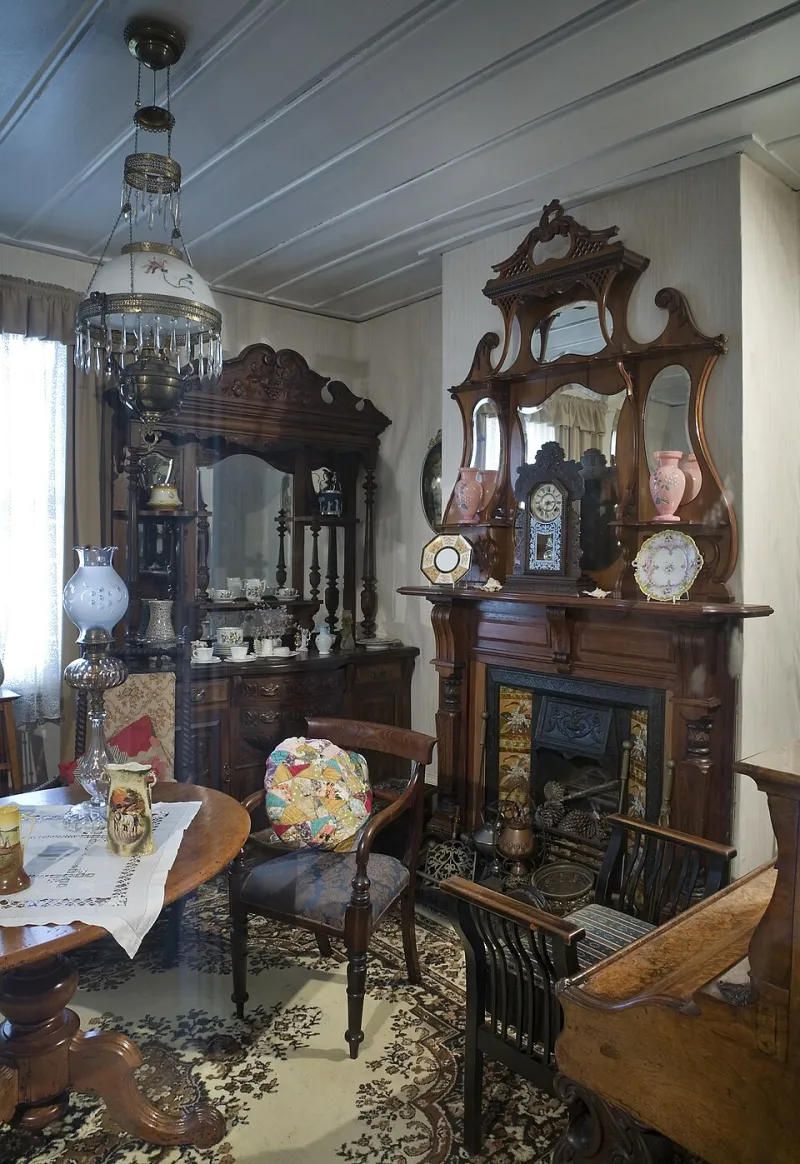
The secret to making second-hand furniture look collected rather than chaotic is editing. Start with a calm base — neutral walls, a decent rug, simple lighting — then let one or two pre-loved pieces do the talking. Repeat wood tones or metal finishes so the room feels deliberate. A vintage sideboard can sit happily next to a modern sofa if the colours connect and the scale is right.
Clean every piece before it comes inside, polish wooden surfaces and replace tired cushions. Give a second-hand lamp a new shade; put a charity-shop vase on a clean shelf. Keep the clutter low and let the furniture breathe. The aim is not to make your home look like a furniture museum. It is to buy well, spend less and end up with rooms that feel like they have been put together by a person rather than a show-home catalogue.