Glass Box, Real Life: How to Make a Conservatory Work All Year Round
Every British home has one, or knows one: the glass box bolted onto the back of the house that made perfect sense on the estate agent's particulars and slightly less sense by the second winter. In summer it's a greenhouse. In January it's a fridge with a view of the lawn. And in the months between, it quietly becomes the place where the ironing board lives, the dead ficus goes to see out its final days, and the Christmas decorations spend eleven months in exile.
That's a shame, because a conservatory is usually the cheapest extra floor space you'll ever get. It doesn't need a builder, a planning application or a second mortgage — it needs a plan. Sort the temperature problem first, then treat the room as though you actually meant it. Here's how.
Deal with the heat before you buy a single cushion
It's tempting to start with furniture, but there's no point styling a room you can't sit in at 3pm in June. Overheating in a conservatory is nearly always a shading problem, not a ventilation one, so start at the glass.
If your budget stretches to it, external blinds or a pull-out awning are the most effective option, because they stop the sun before it gets inside. Internal blinds work too, but choose a reflective or thermal lining rather than a thin decorative fabric — a standard roller blind on a south-facing roof does little more than fade. Roof blinds matter more than side blinds; the majority of the heat comes from above. Solar control film is a cheaper stopgap and worth considering if you're renting or not ready to commit.
Then look at airflow. Opening windows high and low create a stack effect, so keep the roof vents clear of cobwebs and make sure the doors actually open. A couple of well-placed fans won't win any design awards, but neither does a room nobody uses.
Then tackle the cold, draughts included
The other half of the problem is that a conservatory is essentially a very large, very thin wall of glass. Before you spend anything on heating, get the basics right: check the seals around doors and opening windows, replace worn brush strips, and consider secondary glazing on older frames if full replacement isn't on the cards.
When it comes to warmth, a thermostatically controlled electric panel heater is often a more sensible choice than extending the central heating run, particularly if the room is only used in the evenings. If there's already a radiator, don't park a sofa in front of it — this happens more often than you'd think. Underfloor heating is lovely if you're renovating the floor anyway, but retrofit costs can be steep for a room that's secondary space.
And do consider the roof. If your conservatory has a polycarbonate or single-glazed glass roof, insulation or a lightweight tiled replacement is the single biggest change you can make to how the room behaves. It's a proper project with a proper price tag, so get quotes — but it's often the difference between a room used eight weeks a year and one used every day.
Choose furniture that suits a glass room
Here's the thing about conservatories: they're bright, they're exposed, and they make bulky furniture look heavier than it is. A full three-piece suite in a dark fabric will overwhelm the space and, if the sun hits it, fade unevenly within a couple of summers.
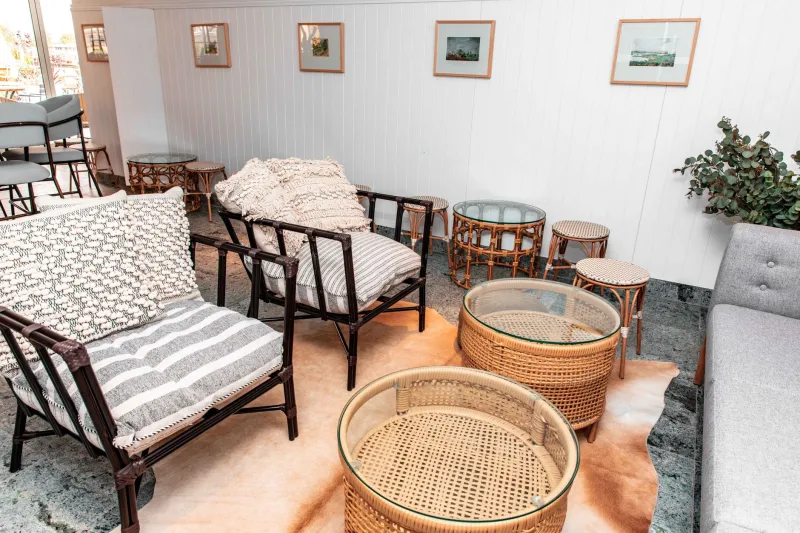
Go for lower profiles and shallower depths. A pair of armchairs angled towards the garden beats a corner sofa in almost every conservatory I've seen. Rattan and wicker work well because they're visually light, and powder-coated aluminium frames cope with temperature swings far better than solid timber. If you want a dining set, a round or narrow rectangular table keeps the walkway clear.
Fabric choice matters more here than anywhere else in the house. Solution-dyed acrylics are the practical answer if the room gets direct sun; linen and cotton are fine in a north-facing space or under good blinds. Pale, slightly faded tones look intentional in a garden room — a deep navy or forest green can look wonderful at dusk and slightly gloomy at noon.
Give it a purpose, or it will invent one
The reason conservatories drift into storage is that nobody decided what they were for. Pick one or two jobs and let the layout follow. A small dining area at one end and two chairs at the other is the classic arrangement, and it works — but only if there's a clear route between them.
A rug is the simplest way to define that zone without building anything. One large rug under the seating area, in a fibre that tolerates sun and the occasional damp-footed dog, does more to make the space feel like a room than any amount of accessorising.
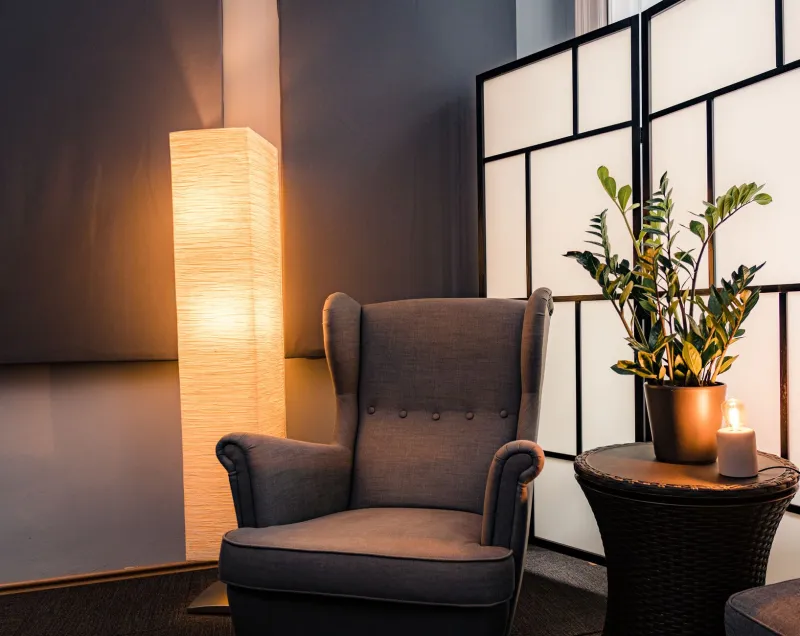
Lighting is the other big one. Most conservatories are lit by a single pendant that came with the house and a lot of glare. Add a floor lamp for evening, a small table lamp on a console, and — if you can — a dimmer. In a glass room, layered light at eye level is what separates 'extension' from 'somewhere you'd actually read a book'.
The finishing touches that make it feel deliberate
Treat the windows like walls. A curtain track fitted just below the roof line, with curtains in a fabric that won't mind the sun, softens the boxy feel and hides a multitude of frame-related sins. Keep the palette tied loosely to the garden — clay, sage, warm neutrals — so the room reads as a bridge between inside and out rather than a separate outpost.
Plants thrive out here, so lean into it: a couple of large architectural pots rather than twelve small ones, and nothing that needs daily watering if the room gets hot. A slim console along the glazed wall gives you somewhere to put a lamp, a tray and a drink without eating floor space. And if the room is cold at the edges, a basket of throws isn't a cop-out — it's evidence that someone actually sits in there.
Modern garden rooms with insulated panels, bifold doors and tiled roofs are a different beast, of course, and need far less intervention. But the styling logic holds: light furniture, a clear purpose, layered lighting and a colour scheme that doesn't fight the view. Whether yours is a 1980s lean-to or a recent addition, the goal is the same — a room that stops being a compromise and starts being the best seat in the house.