Shut the Door on Clutter: Why a Sideboard Still Earns Its Keep
There is a particular kind of tired that comes from looking at open shelving. Everything is visible, everything is dusting itself twice a week, and the good mugs are doing all the heavy lifting while the ugly ones sulk in a cupboard. The sideboard, by contrast, is the quiet friend who turns up, takes your coat, and hides the mess behind a door. It is not glamorous. It is useful. And in a British home where space is tight and storage is rarely generous, useful tends to win.
The case for a door that closes
Open storage works beautifully in photographs. In real life, it asks you to curate every cable, cereal box and birthday card. A sideboard gives you permission to put things away. That matters in a lounge where the TV, router and console chargers all want to live on display. It matters in a dining room where the table is also the desk. And it matters in a hallway where the difference between calm and chaos is usually whether the post has somewhere to go.
The sideboard also has a low, horizontal profile that suits the way British rooms are built. It sits under a window without blocking too much light. It runs along a chimney breast without shouting. It takes the awkward wall in a Victorian terrace and makes it look intentional rather than leftover. In a new-build, where the walls can feel a bit blank and the rooms a bit square, a sideboard adds weight and a sense of arrival without needing a full renovation.
Getting the dimensions right for British rooms
Most of the regret people feel about sideboards comes from buying one that is too deep or too tall. Standard depths often sit around 40–45cm. That is fine in a dining room, but in a narrow hallway or a small living room, a shallow model at 30–35cm will feel much easier to live with. You still get useful storage for bowls, keys, bills and gloves, but you do not turn the room into an obstacle course.
Height is the other number to check. A sideboard is not a chest of drawers and it is not a dresser. Aim for something around 75–85cm high so it sits comfortably below eye level and does not dominate. If you want to put a lamp or a mirror above it, leave breathing room. Measure the wall, the skirting board, the radiator and the door swing before you order. In older homes, walls are rarely straight; in new builds, plasterboard can be less forgiving when it comes to wall fixings. A sideboard with adjustable feet is a small mercy.
Width matters too, but it is less about fitting the gap and more about fitting the room. A long, low piece can make a small room feel wider. A short, tall piece can make it feel cramped. If you are buying online, sketch the footprint on the floor with masking tape and live with it for a day. It sounds fussy. It is cheaper than discovering the doors will not open past the sofa.
What actually goes inside
The joy of a sideboard is that it can absorb the categories of stuff that do not deserve a shelf of their own. Think table linen, napkins and the good serving dishes. Board games that are missing one counter but are still played at Christmas. Chargers, batteries and the drawer of mystery cables. Craft supplies, gift wrap, seasonal candles and the birthday cards you buy in bulk. In a hallway, it can hold gloves, hats, dog leads, spare keys and a shoehorn. In a dining room, it becomes a drinks station: glasses, a bottle opener, spare candles and the tablecloth you only use twice a year.
What it should not become is a filing cabinet. Paperwork has a way of creeping in and never leaving. Give yourself one small basket or folder for the post, and clear it weekly. The same goes for anything that needs to be returned, borrowed or repaired. A sideboard is storage, not a holding pen for your unfinished life.
Styling the top without turning it into a shelf
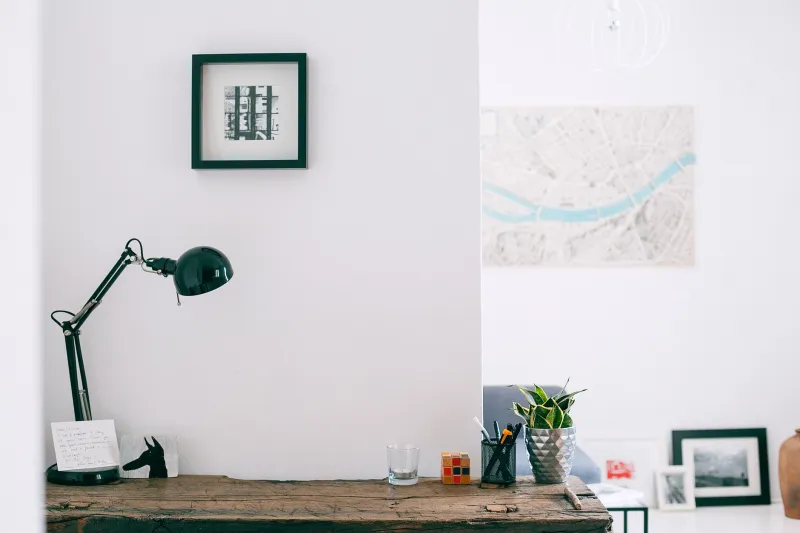
The top of a sideboard is a temptation. It is the perfect height for every bowl, candle and framed print in the house. Resist the urge to fill it. A good rule is to choose three things, or one group and one standalone piece. A lamp, a small tray and a vase is plenty. A mirror above it does the rest. If you want art, lean a frame rather than hanging three in a row; it feels less rigid and easier to change with the seasons.
A tray is your friend because it groups the small stuff and stops it spreading. Keep the tray for practical things: a candle, a coaster, a small plant, a bowl for keys. In a dining room, leave space for serving. In a hallway, keep the top mostly clear so you can put down a bag without moving a sculpture first. And if you have a television on top, measure the soundbar and the cable route before you fall in love with the cabinet. A sideboard with cable holes and adjustable shelves is worth more than one with brass handles and no way to hide the router.
One piece, three rooms
The sideboard is unusually good at changing jobs. In a living room, it can be a media unit, a toy store, a library for paperbacks or a drinks cabinet. In a dining room, it is the serving station and the linen cupboard in one. In a hallway, a shallow sideboard with a bowl on top and a mirror above it makes the entrance feel like a room rather than a corridor. In a rented flat, a freestanding sideboard is a low-risk way to add character without drilling into the walls. In a new-build, it brings a bit of texture and history to a room that has neither yet.
The only real rule is to anchor it if you can. Sideboards can be heavy, and a wall strap is sensible in homes with children, pets or a tendency to lean. If you are renting and cannot drill, look for a model that is deep enough to be stable and keep the heavy things in the bottom. Common sense is not glamorous either, but it keeps the good mugs safe.
A quiet workhorse
The sideboard does not ask for much. It does not need to be the star of the room. It just needs to close the door on the clutter, hold the things you actually use, and give you a surface for a lamp and a bowl. In a British home where every square metre is doing two jobs, that is not a small thing. It is the whole point.